After “Suddenly”
When heaven broke through above a rocky field.
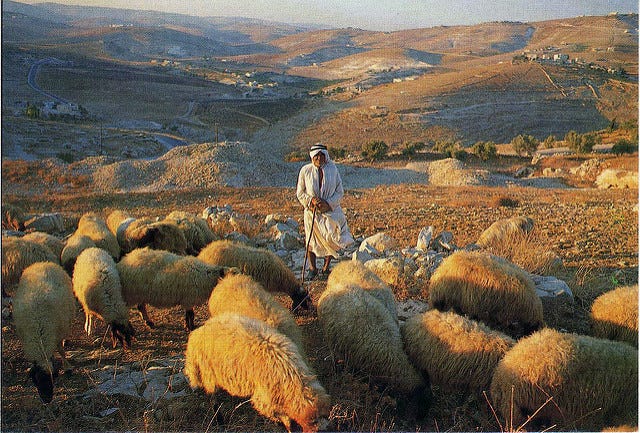
This week I found myself wondering what I could possibly add to a world already awash in Christmas messages.
The words and images are everywhere, circling back on themselves until they lose meaning. We nod, we smile, and something in us barely stirs. And yet the Nativity itself is not a message at all. It is not an idea brought out at this time of year to reassure. If anything, it is a baptism in wonder and awe that should leave us dumbstruck.
I took a moment to look at this historic event—this hinge in history—and ask what it is made of.
Such humble, natural things.
A stable.
A manger.
Shepherds keeping watch.
A young couple far from home.
A star like no other.
And then—astonishingly—in the midst of all this ordinary, earthly life: angels. Not a few, but a host. Heaven breaks through above a rocky field.
When I imagine the shepherds on that night, I see rough men settling their animals. The sheep couching on the ground, their breath visible in the cold Judean night air. The smell of wool and earth. A small fire and all around a stillness. All is well. The natural order holds.
And then Scripture gives us one word that changes everything:
Suddenly.
What came next was not expected or prepared for. It broke in. An angel appeared above them. A song filled the hills. “Glory to God in the highest.” What the shepherds heard and saw filled them with awe to the point of fear—the kind of awe that makes one dumbstruck.
Most of us struggle to understand that kind of awe. I know I do.
Yet, we can catch glimpses of what it must have been like before the suddenly if we look to the natural world and how it unfolds.
Then I remembered: At the old house, I raised alpacas. I loved my animals as I imagine shepherds love their sheep. I loved them for many reasons, but one was how they calmed me to be around them. Winter nights were the best. After the house was quiet, I would slip out to the shed where they were settled down on the bare earth or nibbling from the hay rack.
I remember one night in particular. It was dark in the hay storage area as I passed through to the bedding room where my animals were. The wooden door squeaked slightly. My “girls” looked up and made a soft, humming sound as I entered. Outside the shed the sky was deep with stars. The stillness was palpable.
I keep a small light burning all night—just enough for the alpacas to see. This warm light, the smell of hay and alpacas, the stillness, all had an earthy beauty. It reminded me of Bethlehem on that night. Was this what it was like—just a little?
At this moment I felt close to a stable in Bethlehem.
Not the Bethlehem of greeting cards, but the Bethlehem of darkness and animal warmth and earth. Of Mary and Joseph holding a newborn whose very breath was a miracle.
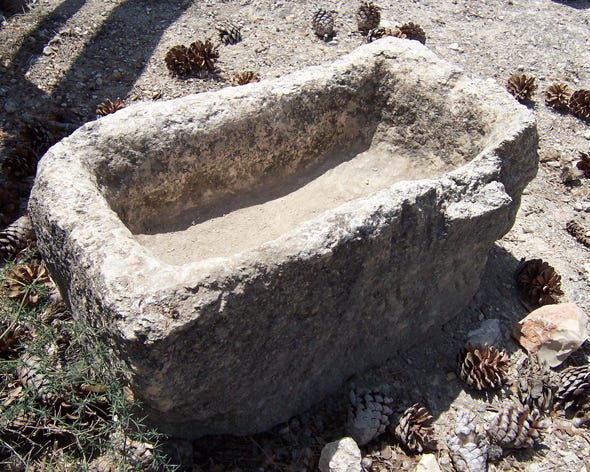
And then, there was the manger. Not a wooden crib but a roughed-out stone—a place for hay or grain—there the child was laid to sleep. Earth receiving heaven in the most literal way.
The tradition is that Bethlehem was the place where lambs destined for sacrifice were born. These lambs were special and received extra care to remain unblemished, to be an acceptable sacrifice. When the lamb would be swaddled—its legs gently bound to prevent injury—and laid in a stone manger for protection.
Luke’s details began to glow with meaning when I learned this. A child wrapped in bands of cloth. Laid in a manger. Shown first not to priests or kings, but to shepherds who would have understood exactly what such signs meant.
Revelation woven into the ordinary materials of the natural world.
The Nativity moves from hay, stone, night, shepherds into awe. Wonder invites us to linger and look with delight. Awe stops us in our tracks.
When the angels appear, the shepherds are not soothed by beauty. They are undone.
They are sore afraid. (Luke 2:9)
This was holy awe—the recognition that the world had shifted. That the order of nature had been opened by the order of grace. Nothing would ever be the same again.
Perhaps this is what the Nativity asks of us now—not more words, but a recovery of awe, a willingness to be unsettled. A willingness to stand, like the shepherds, stunned into silence as heaven opens and the ground is made holy in the lowest place imaginable.
And, to realize that this was never meant to happen just once.
Have a blessed Christmas and see you next week.
Sheila Carroll
Living Books Press
P.S. Be sure to order your 2026 Charlotte Mason calendar (digital or color print)
We have a wooden manger for our goats. There are currently only 3 but at one point we had 15 adults and, occasionally, their kids. For some reason the kid goats generally came at night. My wife and I would be with them in the old wooden barn. She delivered and I cleaned them up and snuggled. Being so close to the magic of babies and birth, I too felt awe.
Delightful post, Sheila! The wonder of awe indeed!