Save the Snags!
How a Dead Tree Becomes the Key to Forest Life
Enjoy the audio version of this reflection.
I first heard the term snag from my younger brother, Joe. We used to teasingly call him “Eco-Joe” because even at an early age, he cared deeply about the natural world.
Many years ago, we were walking along a narrow footpath when he stopped and pointed to a hawk perched in a gnarly old tree.
“Look,” he said, “there’s a hawk in that snag.”
“What’s a snag?” I asked.
“A dead tree that’s home for lots of critters.”
That was a new idea to me, and I never forgot it. Later, as my interest in natural history grew, I began to learn just how remarkable snags really are.
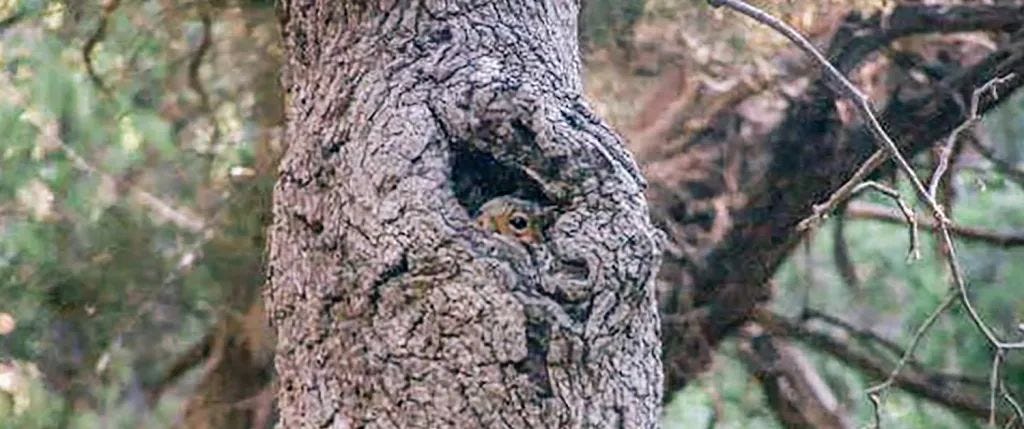
In the photograph, you can see an old trunk — rough bark, hollowed wood, a dark opening where decay has eaten into the heart of the tree.
Can you see inside the hollow? An eye is watching.
A squirrel has made its home in what many people would call dead wood.
And that is just the beginning of a marvelous story.
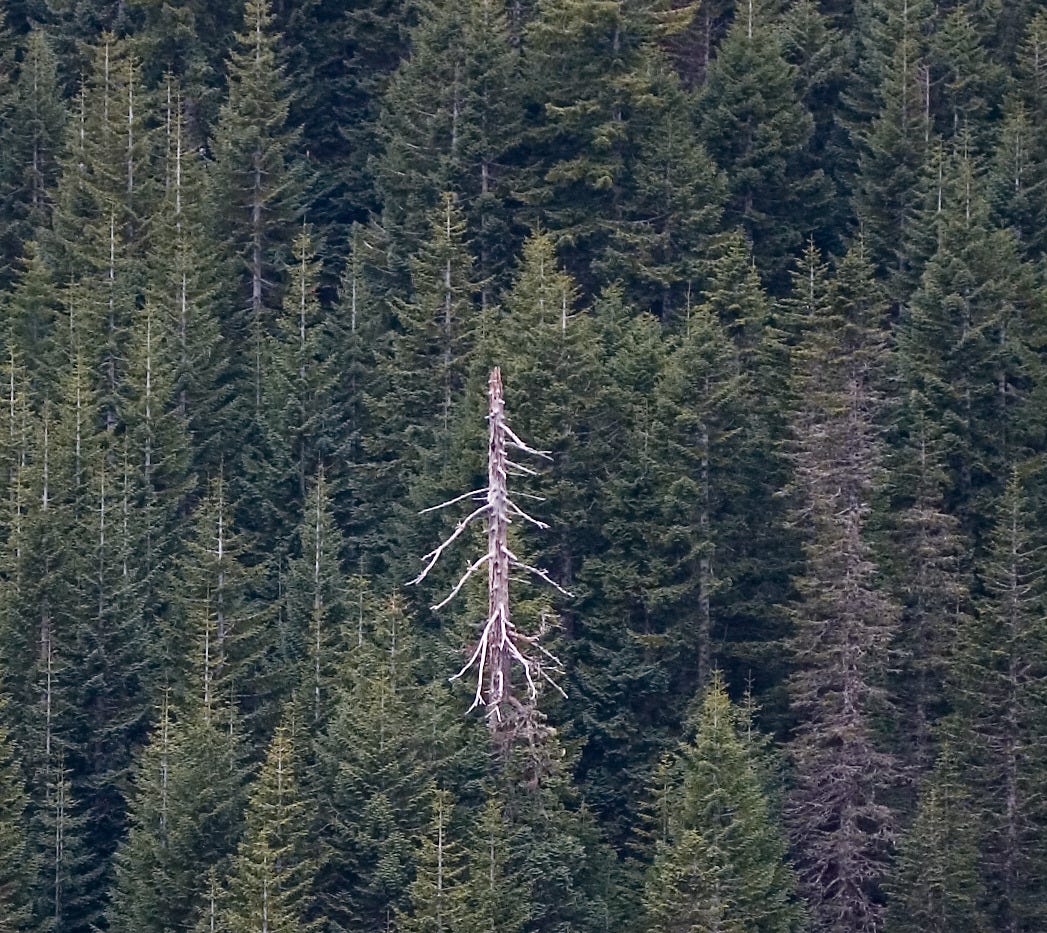
Walk through a woodland, park, or country lane, and you will surely notice snags standing among the living trees — gray trunks stripped of bark, holes in the main trunk, broken crowns reaching eerily into the air.
Most people glance at such a tree and think:
Dead wood. Clear it out.
The instinct is automatic—remove it, tidy the woods, clear the danger.
But in the rich, flourishing life of a forest, that gray trunk may be one of the most important trees standing.
Naturalists call them snags — standing dead or dying trees. Foresters call them wildlife trees. Whatever their name, they are not lifeless leftovers.
Just the opposite.
They are the beginning of another chapter in the life of the tree.
A Second Life
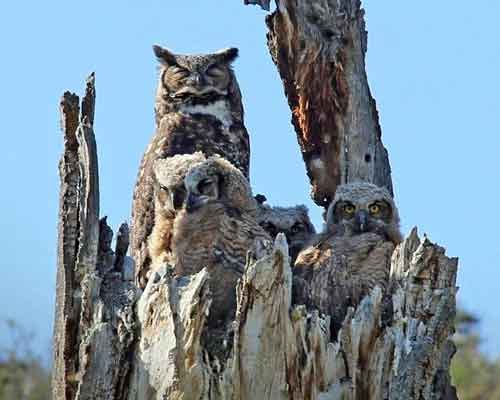
A tree may stand for decades or even centuries, slowly gathering sunlight, water, and minerals into wood and leaves. Over time, the crown grows thinner—a large limb breaks, exposing heartwood. Small wounds appear in the bark where fungi or insects find entry.
The tree moves slowly through the seasons of its life.
Eventually, it stands leafless but upright — what foresters call a hard snag. For years, sometimes decades, it remains standing while weather and fungi slowly soften the wood. Later, it becomes a soft snag, easier for birds to carve and for insects to inhabit.
Only much later does the trunk finally fall, beginning yet another life on the forest floor as a nurse log for new trees.
Aldo Leopold, the revered author of A Sand County Almanac (1949), described this long life of a tree in his essay “The Good Oak,” tracing the life that passed through one tree across decades—fire, insects, woodpeckers, storms—showing that the tree continues to participate in the life of the land long after it dies.
“A tree is a symbol of life, fertility, and vigor. But the old oak log I am splitting is no less a symbol of life… Each year’s ring writes its own chapter in the biography of the oak.”
Once a tree begins to decline, insects move into the loosening bark. Beetles tunnel through the wood. Ants establish colonies inside the trunk. Fungi send pale threads through the heartwood, slowly softening the tree.
Then comes the sound of drumming.
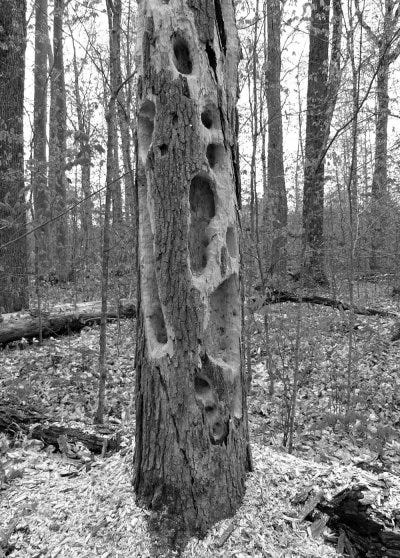
A woodpecker lands and begins to tap along the bark. It’s remarkably sharp hearing detects the faint movement of insects within the tree. Soon, the tapping becomes chiseling. Chips of pale wood fall to the ground.
When the woodpecker finishes feeding, it leaves behind a hollow for other small creatures to live in—mice, voles, chipmunks, and squirrels.
If the cavity is deep enough, like those carved by a pileated woodpecker, it becomes home for chickadees, swallows, nuthatches, owls, even small mammals and bats. These animals cannot carve their own cavities. They rely on the work of the forest’s carpenters.
One hole may house a northern flicker one year and a swift the next. A squirrel may use it for winter shelter. Bats may roost there through the summer.
Each new tenant receives what another creature has already made possible.
Life gives unto life.
Biologists estimate that hundreds of North American species depend on snags for food, shelter, or nesting sites. This is about the continuity of life in the forest, not just one tree.
When I see a snag, I am reminded of what botanist Robin Wall Kimmerer calls the gift economy of nature. In her book The Serviceberry: Abundance and Reciprocity in the Natural World, she writes that the living world runs not on accumulation but on giving.
“All flourishing is mutual.”
Kimmerer is one of many who see this mutual life as part of the deep order of creation. Seventeenth-century naturalist John Ray wrote of the “harmony and mutual usefulness” woven through the natural world — the way living things support one another.
A Keystone in the Living Forest
The gift-giving snag is what ecologists call a keystone species.
A keystone species is a tree, plant, or animal that supports far more life than its own. Remove it, and the life around it begins to falter.
Knowing this has changed how I look at a snag that once seemed useless.
Now, when I look up at a snag, I feel a sense of reverent respect.
Here is the remarkable and hopeful thing: once you see this, you cannot un-see it.
A walk through the nearby woods is never the same again.
A Third Life
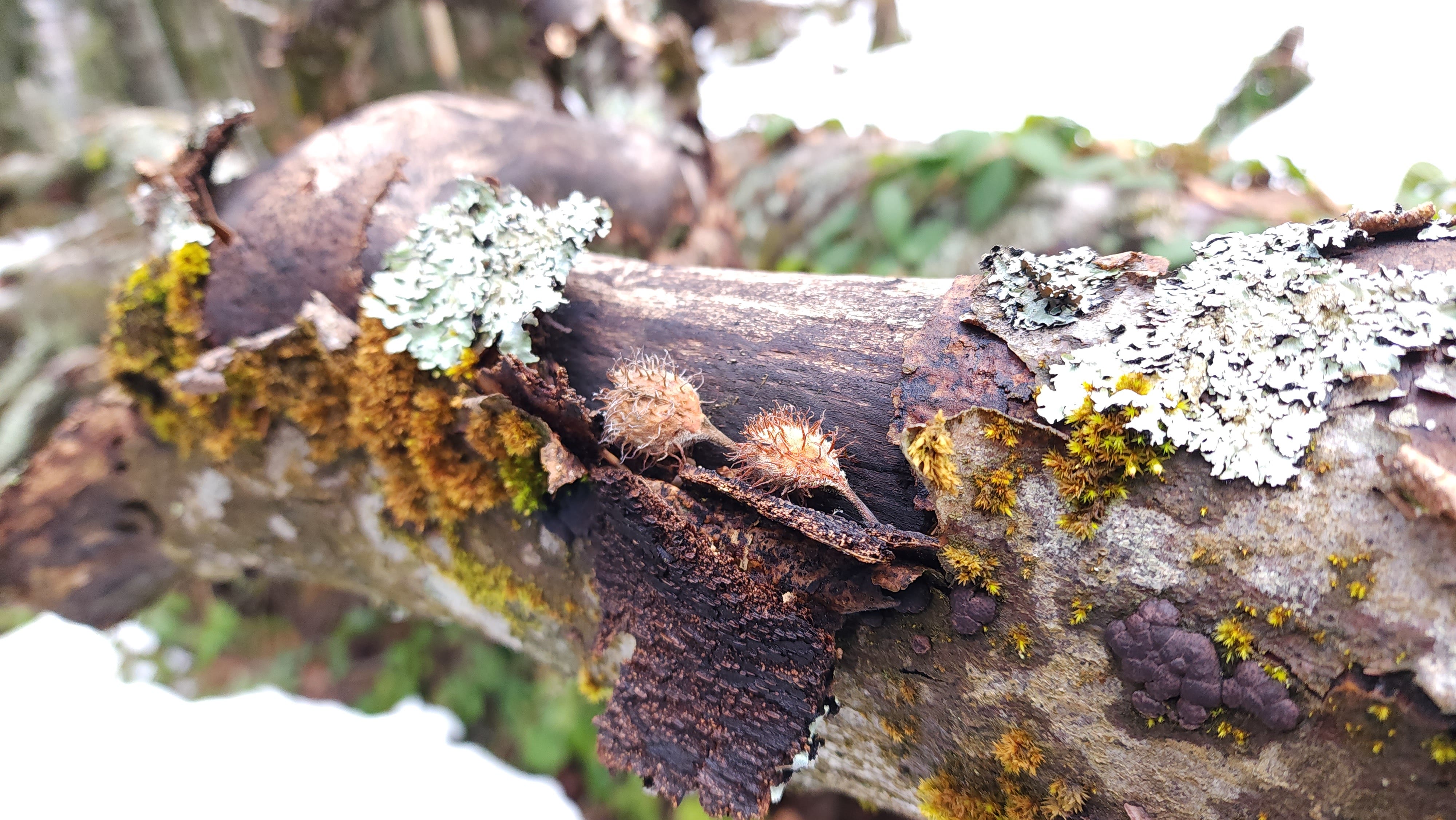
Eventually, the snag begins its final transformation.
Rain softens the wood. Fungi hollow the trunk. Storms weaken the base.
At last, the tree falls.
Yet the story is still not finished.
The fallen trunk becomes a nurse log—shelter for insects, salamanders, and small mammals. Moss spreads across the damp wood. Seeds find moisture beside the log and begin to grow.
To me, they seem even more beautiful in this latest form.
Knowing a tree in all its seasons is to learn its long story, and in seeing it, the world we inhabit widens.
A snag is a dwelling place for birds and animals, a lookout for hawks, a nursery for insects, and eventually food for the forest floor. A single hollow trunk may support hundreds of small lives.
So when you see one standing at the edge of a field or wood, let it stand.
The forest is still using that tree.
Before I Close
I’m considering creating a small guide for readers of Nature Study Notes on simple ways to welcome more life into your own backyard—things like saving snags when possible, reducing outdoor lighting so fireflies can return, planting for pollinators, non-toxic weed control, E and other gentle practices that help the living world flourish.
Would something like this be useful to you?
If so, leave a comment and tell me one thing you would most like to learn how to do in your backyard.
Your answers will help me shape the guide.
Grateful for your company,
Sheila Carroll
Living Books Press
very informative and well written loved it wally
This is a great idea. I would love to learn ways to plant for pollinators and use non-toxic weed control.
My family and I will be looking at snags and fallen logs in a whole new way!
Thank you, Sheila.