When We Tend a Garden
...the garden tends something in us
Enjoy the Audio
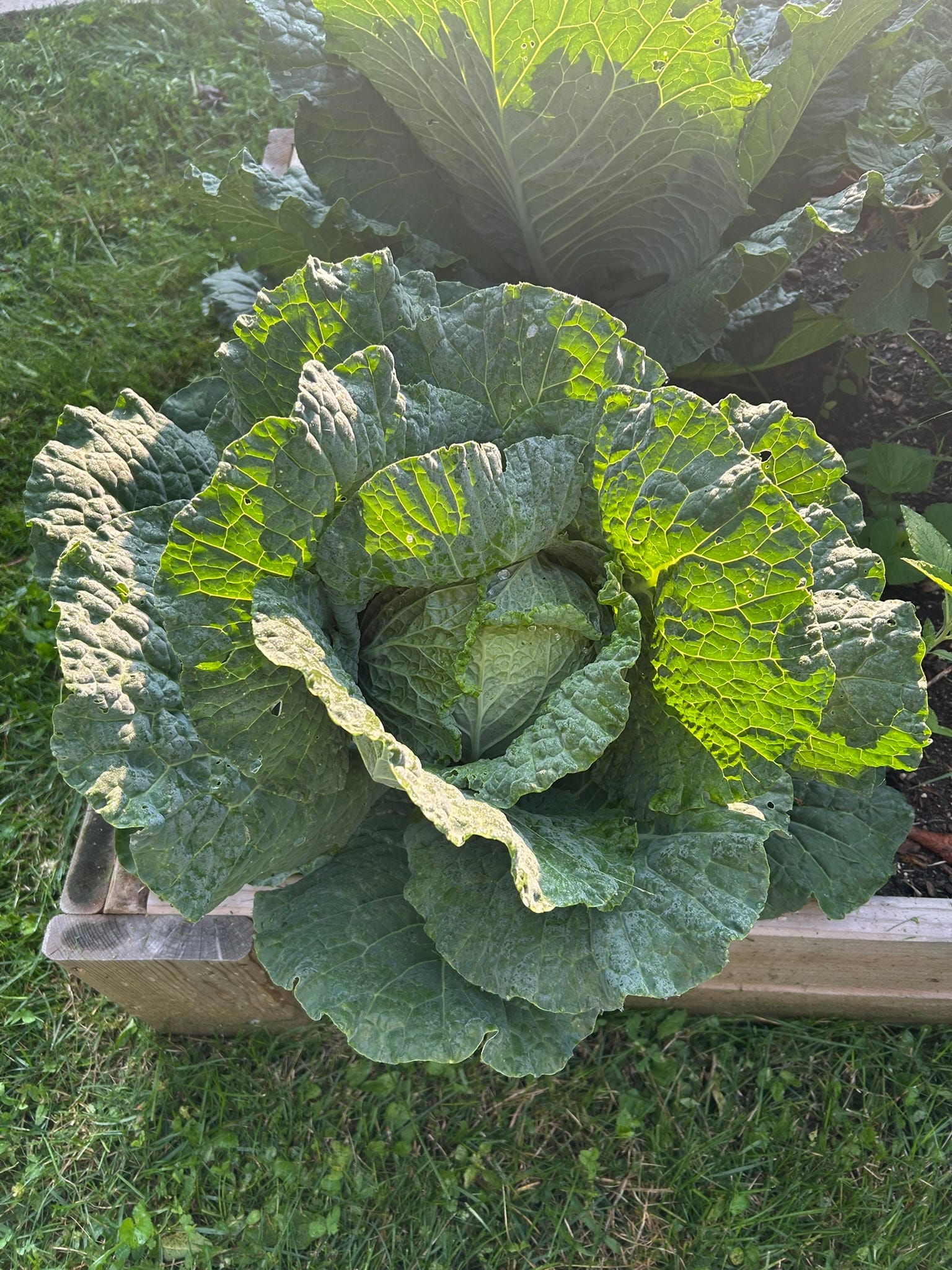
I look out over my garden in its late-summer fullness. The cabbages have become firm, heavy heads. The tomatoes are ripening faster than we can eat them. But the leaves of the butternut squash are already yellowing.
This is the time of year when I begin to reckon with the garden. What grew as I had hoped? What failed? What did I plant too closely or too late? What will I do differently next spring?
In doing this, I take part in an ancient ritual. Farmers have always stood in their fields in late summer, assessing the harvest and measuring what it might provide through fall and winter. Even while gathering this year’s yield, they are thinking about the next.
I am reminded of Aldo Leopold, who writes about his farm in a way that makes you feel you are there.
There are two spiritual dangers in not owning a farm. One is the danger of supposing that breakfast comes from the grocery, and the other that heat comes from the furnace.—A Sand County Almanac (1949)
A garden, even small raised beds like mine, corrects that error. It reminds me that food begins in soil, rain, sunlight, seed, and labor—and that much of what happens between planting and harvest remains beyond my control.
Yet there is something more.
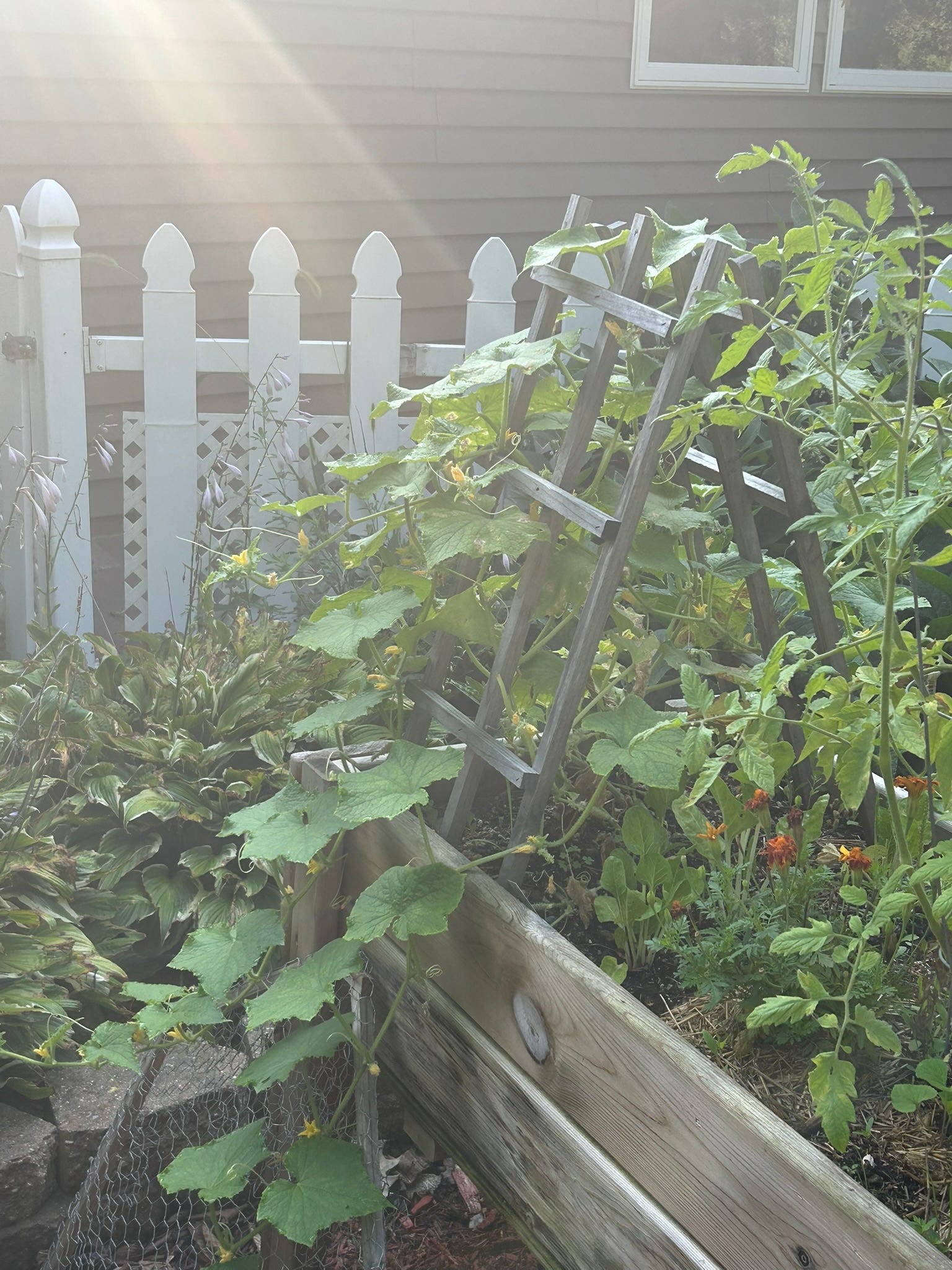
When I stand looking at my garden in the heat of the day, I feel happy. Maybe it is the soil beneath my fingernails. It makes me part of a long conversation that reaches back through all the men and women who have saved seed, turned the soil, watched the sky, waiting for something to grow.
My garden is not a matter of life or death. If the cabbages fail, I can buy a cabbage. Yet I made a garden this year. I participated in something timeless. I placed seeds in the ground and waited. I watched blossoms become fruit. I saw some plants flourish and others fail for reasons I will ponder and remember next year.
Had I not made the garden, I would not have known this feeling of taking part in something ancient—and good. I would have been the poorer for it.
Leopold reminds us that we belong within the life of the land.
Land, then, is not merely soil; it is a fountain of energy flowing through a circuit of soils, plants, and animals.
The garden lets me feel that current moving beneath my own hands. I am not its source. I enter it for a season. I sow and weed, water and gather. Then the plants die back and return to the soil.
There are many ways to take part in this ancient work. We don’t need a garden, though tending one is a lovely task. We need only tend something that grows—a pot of herbs on a windowsill, a tomato plant beside the door, a small patch of earth. We water it, watch it, and learn what it needs. If it feeds us, so much the better. But whether or not it comes to the table, in tending it, we have already been fed.
We can also invite our children into this long conversation with the living world. My guide, Nature Study Companion: Simple Ways to Explore Wonders Near and Far, offers simple ways to begin—right where you are.
Sheila Carroll
Living Books Press
Thank you! Your garden is lovely!